Materials
Ceramic Steel and Porcelain Enamel Boards: When the Surface Is Worth the Upgrade
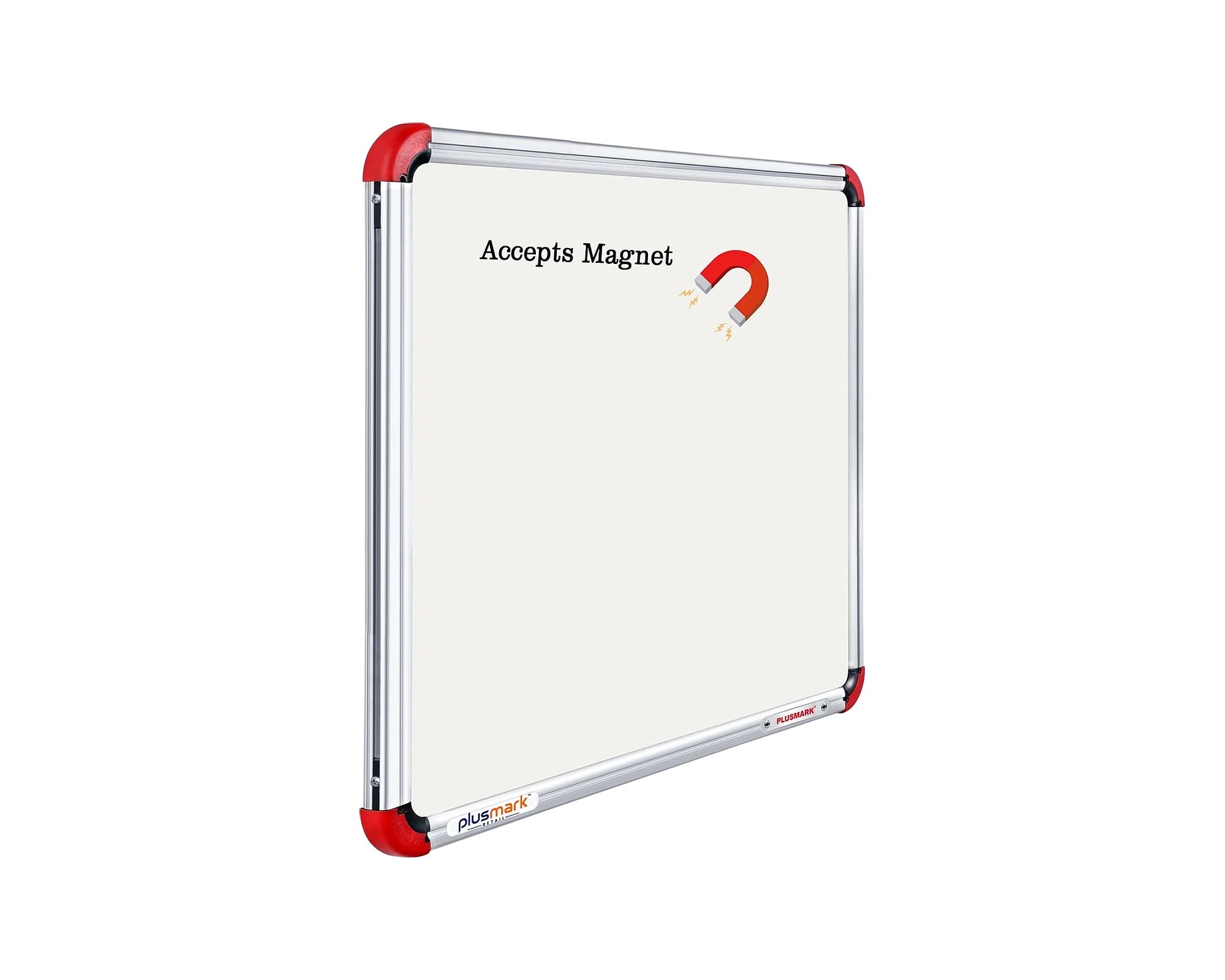
Most marker boards fail slowly in the same way. Ink stops coming off, faint ghosts of last week's writing stay on the surface, and cleaning takes longer each month. That is the surface wearing through, and it is why institutions with heavy daily use stop shopping by size and start shopping by surface.
Plusmark's answer is the ceramic steel board — a porcelain enamel surface fused onto steel. The catalog lists it under both white boards and chalk boards, in two series, and describes it as designed for very long product life under regular institutional use. This guide is about when that claim matters to your building.
What a ceramic steel surface actually is
Porcelain enamel is a glass-like coating fired onto a steel sheet. The result is hard and non-porous, which is the combination that keeps marker ink sitting on top of the surface instead of soaking into it. The catalog describes the writing area as suitable for continuous writing and frequent cleaning, with a smooth finish that keeps performing consistently over time.
The steel underneath does a second job. Because the substrate is metal, these boards accept magnets — the catalog lists them as ceramic steel magnetic boards — so the same wall can hold charts and take marker writing without a separate pin surface.
Where it differs from the other hard surfaces
Plusmark documents three hard-wearing surfaces, and they are not interchangeable. Marker Grade HPL sheet is the high gloss non-magnetic writing surface. Resin coated steel is the magnetic surface used across the magnetic range. Ceramic steel / porcelain enamel steel sits above both on the durability axis and is the one listed for very long product life.
| Resin coated steel | Marker Grade HPL | Ceramic steel / porcelain enamel | |
|---|---|---|---|
| Magnetic | Yes | No | Yes |
| Built for | Daily magnetic display | Writing and wiping | Long surface life under heavy use |
| Cleaning load | Regular | Regular | Suitable for frequent cleaning |
| Where the catalog places it | Magnetic white and chalk boards | Non-magnetic white boards | Classrooms and institutions, colleges |
| Series available | Metallic Premium, Deluxe Standard, Eco Regular | All four series | Metallic Premium, Deluxe Standard |
It comes in white and in chalk
The ceramic board is listed with two variants: a white board surface for marker writing and a chalk board surface for chalk. The chalk version is a porcelain enamel green board that accepts magnets and is described as ultra-durable, scratch-resistant and non-porous, with glare-free writing and effortless cleaning.
That matters for schools that teach with chalk but cannot put a fresh board up every two years, and for colleges where the same room is used by six batches a day. Both variants sit in the same aluminium framing as the rest of their series, so the frame choice is made separately from the surface choice.
The two ways it is framed
Metallic Premium Ceramic carries heavy-duty aluminium framing with Signature Dual-Tone Corners — the top of the Plusmark series ladder. Deluxe Standard Ceramic uses aluminium framing with Electroplated Chrome Corners, the same corner specification the catalog pairs with the Deluxe Standard series.
Same surface, two budgets. If the board is going on a reception wall, an auditorium or a corridor where the frame is part of the room, the Metallic Premium build is the one that reads properly. If it is going into a working classroom, the Deluxe Standard version delivers the same surface for less.
When ceramic is the wrong choice
It is a durability purchase, so it is wasted where the writing load is light. A seminar room used twice a week, a staff room board or a home study corner does not need porcelain enamel, and the catalog itself points the other way: for similar writing performance at a more economical level, non-magnetic Metallic Premium boards are listed as the alternative when magnetic use is not required, and non-magnetic Eco Premium boards where the budget is tighter.
The honest test is a number: how many hours a day does this surface get written on and wiped? Two or three is a resin coated steel or HPL decision. Eight, ten, twelve, with several teachers using the same board — that is where ceramic earns its place on the specification.
How to specify one
Send four things: the surface (ceramic white or ceramic chalk), the series (Metallic Premium or Deluxe Standard), the size from the standard range, and the quantity, along with the room. Board sizes and framing are confirmed against the requirement by the sales team, so a room-wise list is more useful than a single line item.
Questions on this topic
- Are ceramic white boards magnetic?
- Yes. Plusmark's ceramic boards are ceramic steel / porcelain enamel steel, and the steel backing means magnets hold on them. The catalog lists them under ceramic steel magnetic boards.
- Is a ceramic board the same as a porcelain whiteboard?
- The terms describe the same construction — porcelain enamel fused onto steel. Plusmark's documentation uses both phrasings, listing the surface as ceramic steel / porcelain enamel steel.
- Which rooms should use ceramic boards?
- The ones with continuous writing: college lecture rooms, main classroom boards used by many teachers through the day, halls and corridors where a board is expected to stay serviceable for years rather than seasons.
Boards mentioned in this guide
Sizes, surfaces and frame variants listed here are made to order. Send Plusmark your room details and quantity and the team will confirm what is available in that series.