Materials
Six Board Surfaces Explained, and What Each One Is Really For
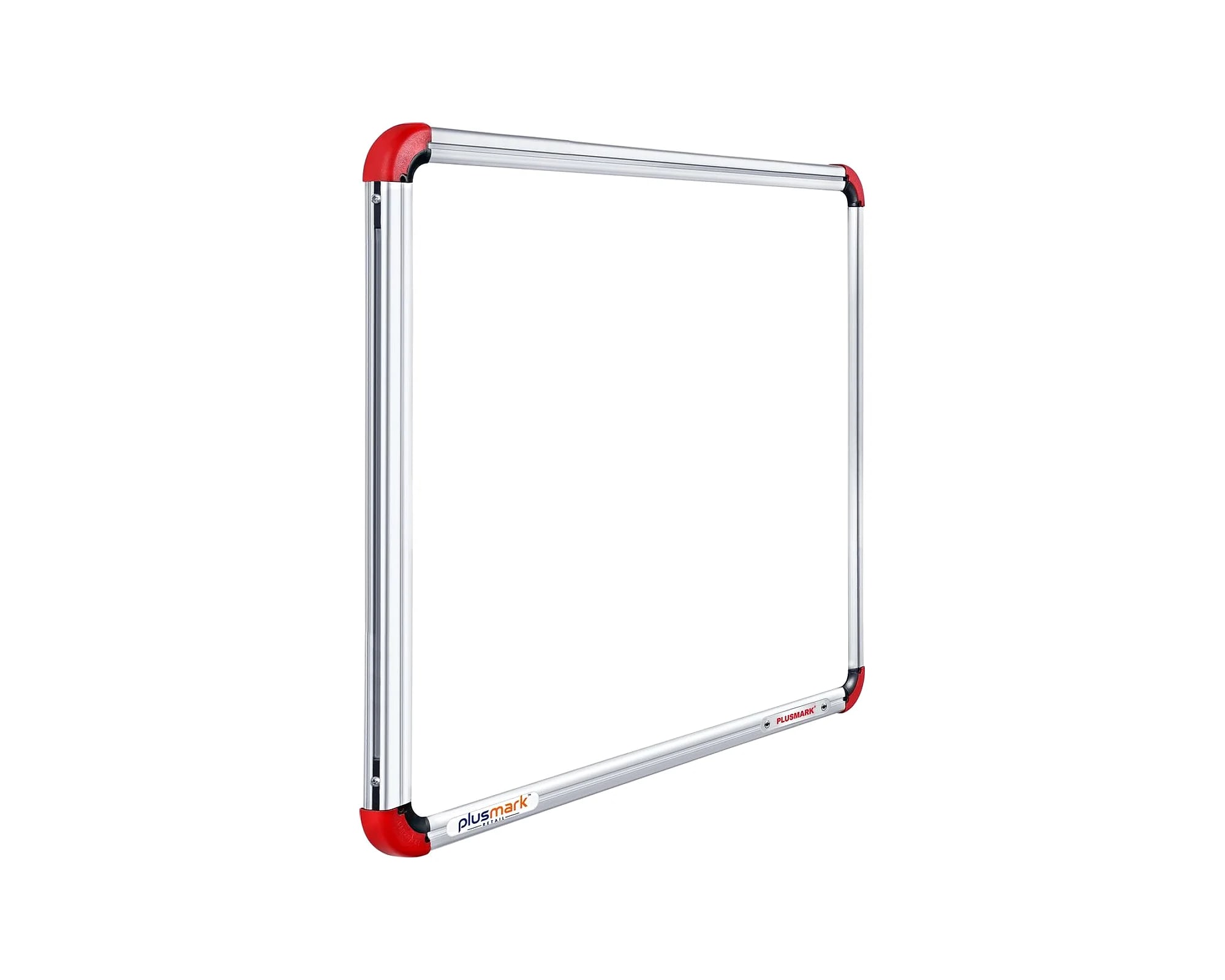
Two boards of the same size, in the same frame, can behave completely differently for five years because the skin is different. Surface is the part that gets written on, erased, knocked and cleaned, and it is the part that finally decides when a board is replaced.
Plusmark builds six surfaces. Here is what each one is and which room it belongs in.
Marker Grade HPL — the everyday classroom surface
High Gloss Marker Grade HPL sheet is the standard white board surface: ultra-smooth, high-gloss, made for effortless writing and easy erasing, and resistant to wear. This is what most schools, colleges and offices should order when the board is used for marker writing all day.
It is the surface behind the white boards in the Metallic Premium, Eco Premium, Deluxe Standard and Eco Regular series, so the same writing behaviour comes in four build weights.
Chalk Grade HPL — when the room still uses chalk
Hardcore Chalk Grade HPL is non-reflective and glare-free, so a student in the back row can read it from an angle, and the hardcore grade adds scratch resistance because chalk is abrasive in a way marker ink is not.
Schools and colleges that teach with chalk choose this surface. It is available magnetic and non-magnetic, in green and white board formats.
Resin coated steel — the magnetic surface
A steel core with a resin coating, supplied in white for marker and green for chalk. Writing performance aside, its actual job is accepting magnets: charts, rosters, diagrams and holders stick to it.
Planning walls, offices, labs and institutions that display as much as they write are the usual home for it.
Ceramic steel — for rooms that never stop
Ceramic boards use a hard, non-porous porcelain enamel steel surface. It is built for continuous writing and frequent cleaning, which is what long service life actually depends on in a high-traffic institution — not how carefully people use it, but how often it gets wiped.
Because the surface tolerates heavy cleaning cycles, ceramic is what to specify for large classrooms, lecture halls and training centres where a board is used and erased all day, every day. It is offered in the Metallic Premium and Deluxe Standard series, in white and chalk versions.
High Gloss Melamine — the budget-weight surface
Melamine is the surface on Eco Regular boards and on the face of some double-sided boards. It writes and erases well for light and budget applications, and it is the honest choice when a board is used occasionally rather than continuously.
Put it in cabins, small tuition rooms, back-up corridors and any room where the board is written on now and then. Do not put it in a lecture hall that runs six periods a day.
Cloth surfaces — for display, not writing
2 mm Blazer Cloth and Super Fine Velvet Cloth, stretched over soft pin-friendly cores in several colours, are notice board surfaces. Nothing is written on them; notices, circulars and charts are pinned into them.
They are the right surface for reception areas, staff rooms, department corridors and examination cells, and they come in frame weights from Eco Regular up to Metallic Premium.
Choosing in one pass
Match the surface to how often the board is used, not to how the room looks. Marker Grade HPL for daily marker work, Chalk Grade HPL where chalk is still used, resin coated steel where things must stick, ceramic where cleaning cycles are constant, melamine where use is occasional, cloth where nothing is written.
Questions on this topic
- Which surface lasts the longest?
- Ceramic steel — porcelain enamel — is the hardest and non-porous surface in the range and is built for continuous writing and frequent cleaning, which is why it is specified for high-traffic institutions.
- Is melamine a bad choice?
- No, it is a light-use choice. High Gloss Melamine suits budget applications and rooms where the board is written on occasionally. Problems start when a melamine board is placed in a room that uses it all day.
- Can a board surface be magnetic and chalk-grade at the same time?
- Yes. Resin coated steel is made in green as well as white, so magnetic chalk boards exist and are listed separately from non-magnetic chalk boards.
Boards mentioned in this guide
Sizes, surfaces and frame variants listed here are made to order. Send Plusmark your room details and quantity and the team will confirm what is available in that series.