Products
Acrylic Folder Display Boards: For Documents That Must Be Read, Not Just Pinned
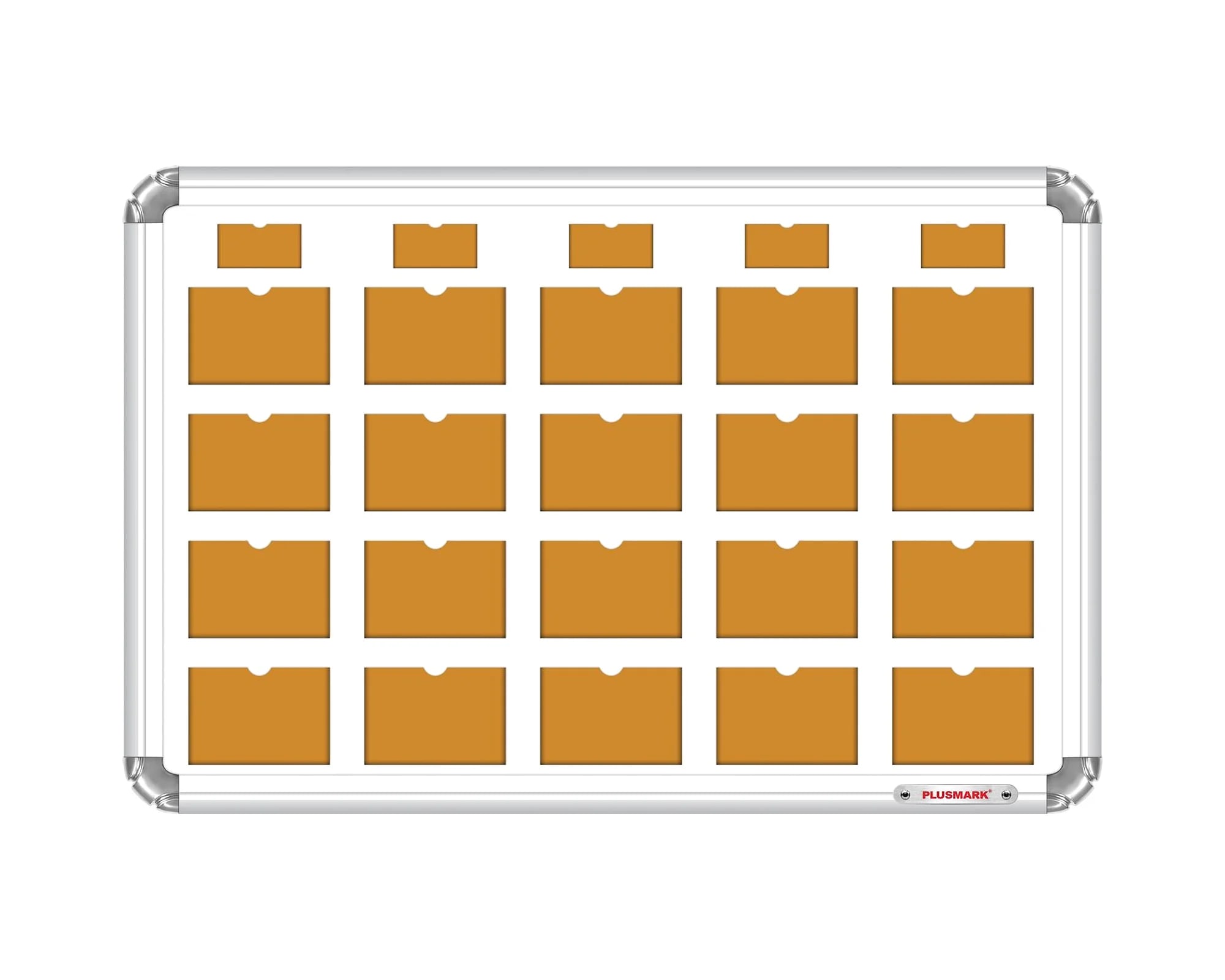
Most display problems in an Indian institution are not about the board. They are about the paper. A standard operating procedure pinned to a cloth board survives about ten days of sunlight, handling and humidity before it is unreadable, and the notice board ends up covered in the tape marks of documents nobody replaced.
Plusmark's answer for that job is the Acrylic Folder Display Board — transparent front folders in a strong aluminium frame, listed for charts, reports, standard operating procedure sheets and production data. The catalog is explicit that folder size and quantity are made as per customer requirement, which is the whole point of the product.
What the board is
A framed panel with clear acrylic folders mounted on the face. Each folder holds one sheet flat and open at the top, so a document slides in and out without pins, tape or staples. The catalog's own description of the benefit is clarity and access: clear visibility through the transparent front folders for easy document viewing, organised display of charts, reports, SOPs and production data, and papers that can be inserted and replaced quickly.
It is listed under specialty display boards, in a strong aluminium frame suitable for industrial use — which is why the shop floor, not the reception, is where you see most of them.
What it does that a notice board cannot
A cloth, cork or fabric board is a pin surface. Paper on a pin surface is exposed: it curls at the corners, the pin hole tears, ink fades where the sun hits it, and one curious reader can wreck the layout.
Behind a clear folder the same sheet is held flat, protected from handling, and stays aligned with the other sheets on the board. The layout does not drift. That matters most where the board is meant to be read in a fixed order — a process flow, a shift chart, a price list, a compliance sheet.
What it does that an acrylic door cover board does not
The two acrylic products get confused constantly, and the difference is the lock and the unit of access.
- An acrylic door cover notice board is an enclosed pin surface behind hinged doors, available as single door or double door. It protects a whole board area, and it can be locked. Notices that must stay put, or that are official, belong there.
- A folder display board has no lock and no door. Access is per folder, which is why swapping one document does not disturb the rest of the grid. Documents that change weekly belong here.
- The practical rule: sensitive or official content behind a door, frequently replaced content in folders.
How to decide the folder grid
Folder size and quantity are made to requirement, so the board is designed backwards from the documents rather than forwards from a standard size. Work through four questions in writing.
- What is actually going in each folder — one sheet, a folded circular, a printed chart? Measure the biggest thing that must fit.
- How many folders across, and how many rows down? That is the grid, and it sets the board's overall size.
- Does the board need a title row or a heading strip above the grid?
- Will the document size change? Capacity added later means a new board, so specify a little headroom in the count if the department is growing.
Where these usually go
The applications the catalog lists are a fair map of the rooms: charts, reports, standard operating procedure sheets, production data and industrial use.
- Factory and workshop walls, where the SOP for each station has to be readable at arm's length and replaced without tools.
- Offices and admin blocks, for policy sheets, forms and formats that must stay flat and legible.
- Coaching centres and institutions, for batch timetables and fee circulars that change every session.
- Shops and counters, for price lists and offer sheets that are handled by customers.
How to specify one
Put the document itself in the enquiry. A photograph of the sheet, its size, and how many of them need to be up at once answers more than a written brief would. Then add the wall — where the board goes, roughly how far readers stand from it — the frame variant if you have a preference, and the quantity across locations.
Because the layout is made to requirement rather than ordered off a standard list, folder size and quantity are confirmed with the sales team along with the board's overall dimensions. One line per location beats one total number.
Questions on this topic
- Can the folders be resized after the board is made?
- No. Folder size and quantity are decided when the board is manufactured, so a change of document size means a new board. Specify against the actual sheet you intend to display, and build in headroom if the department might grow.
- Is a folder display board lockable?
- It is not listed as a lockable product. The lockable option is the acrylic door cover notice board, which encloses a pin surface behind hinged doors in single door and double door builds. Choose that when the content is official or must not be handled.
- What can go in the folders?
- Printed sheets that get replaced: charts, reports, standard operating procedure documents and production data are the applications the catalog lists. Anything that needs to stay flat, aligned and readable without being pinned falls into the same category.
Boards mentioned in this guide
Sizes, surfaces and frame variants listed here are made to order. Send Plusmark your room details and quantity and the team will confirm what is available in that series.